Skip to content

Archives

Podcast from Parallel Play on biting behavior

From Parallel Play: a podcast for educators who love toddlers

Biting Behavior in Toddlers and How to Respond

Biting brings up emotions for everyone, including children, education staff, and families. Toddlers are beginning to learn how to express their wants and needs. They are also learning how to regulate their emotions through verbal and non-verbal communication. This podcast reviews the many emotions of biting and reasons why toddlers might engage in biting. Discussions include the importance of validating toddlers’ feelings, ways to teach toddlers appropriate behaviors to express wants and needs, and how to support the development of self-regulation.

Key Topics 

In this podcast, we discuss:

  • Emotions that come up when biting occurs in the learning environment, from multiple perspectives
  • Ways to respond to biting in meaningful ways

Target Audience

This podcast benefits:

  • Teachers and family child care providers who interact daily with toddlers
  • Education managers, coaches, and child development specialists
  • Support staff

Listen to the Podcast

Select the link to listen: https://eclkc.ohs.acf.hhs.gov/podcast/biting-behavior-toddlers-how-respond

Check out other Parallel Play episodes in Head Start Talks or Infant/Toddler Teaching Practices.

Related Resources

Explore related resources on the Early Childhood Learning and Knowledge Center (ECLKC) to learn more.

A Beautiful Day in the Neighborhood– Taking Seven Three Year Olds on Neighborhood Walks

Getting a three-year old ready to go outside during the winter in Seattle is no small feat—rain boots, jackets, hats, gloves, and of course the impending tantrums to go with all of that. Miss Savannah and I know this firsthand, as we get our seven Garden kids ready for outside time each day. Whatever got our students to cooperate yesterday might not work today, a common reality for everyone in the vicinity of a three-year old. Miss Savannah and I switch from silly to serious, songs and games, and competition and conversation to get our kids outside.

Most mornings, we take our Garden friends on a neighborhood walk; we’ll go to the community P-Patch, the field, or just around the block. Keeping our students safe on our walks is the number one priority. Our Garden friends have been so great at showing us how safe they can be crossing the street! Miss Savannah and I have worked with our kids to practice using their body language as opposed to their voices to keep everyone safe. We have everyone “catch a bubble” when we cross the street to keep voices off and we hold one hand in the air to show to cars driving by that we are crossing. Giving the kids something to do with their bodies helps them keep their voices off in the street, allowing Miss Savannah and I to hear what is going on around us.

Keeping our students entertained while we are on the sidewalk is a must when it comes to ensuring that we keep moving at a pace that everyone can keep up with. Singing songs often help our students use walking feet and safe bodies, while also keeping them engaged with each other and us. Our favorite these days is Wibbly Wobbly – “Wibbly Wobbly Woo, an elephant sat on you, Wibbly Wobbly Wee, an elephant sat on me! Wibbly Wobbly Wiss Worgan, an elephant sat on Miss Morgan…” and so on. This is a great song to point out colors/shapes/nature around us, as you can put any noun into it. We also love The Ants Go Marching, as it is very rhythmic and helps all of our friends keep a constant rhythm with their safe walking feet.

We love our Garden neighborhood walks! It makes Miss Savannah and I so proud to see our students using safe bodies, engaging with their friends and teachers, and take notice of the beautiful world around us.

What I Learned from the Respectfully Yours RIE Video

Here is the video link for those interested in watching:

Kelsey Gustafson

SLC Montlake

November 12, 2021 In-Service

What I Learned from the Respectfully Yours RIE Video

1. RIE promotes development of people who are competent, feel good about themselves
and realistically trust the world.

2. Avoid asking or making them do what they cannot do yet or be what they cannot be – as
in, support, encourage and celebrate their current skills.

3. Be sensitive to when they want to be engaged with – when they look for someone’s eyes.
Don’t simply interrupt them because we feel like we need to stay busy or it has been
quiet for too long.

4. In RIE, stimulation equates to interruption. Infants are constantly engaged with their
environments, we don’t need to prove we are there.

5. Boundaries and “house rules” are suggested at a young age. Be firm in statements like “I
don’t want you to touch that” and “I won’t let you bite” this shows them you will do
everything you can to keep them safe.

6. Magda suggests letting children “fight” through conflict. We can move close to give the
message that we think they can handle it, but be available to assist if needed. This
empowers them to figure out a resolution on their own.

7. Give them time to solve a problem when we can. The more we trust that they can do it,
the more they CAN do it. Instead of teaching them to depend on teachers and adults for
everything.

8. Don’t set out to “teach” things to children, as if we know best for their bodies. We take
away their chance of discovering on their own when we teach one way to do things.
Magda suggests that “taught children are harassed children.”

9. It is suggested for teachers to try less, be less busy and enjoy more. That way we can be
less tired and more available for observation and attentiveness. And that it is
unnecessary to “be busy” – just be still and don’t overwhelm or overstimulate them. All of
their senses are sensitive and taking in the world around them.

10. Use distraction as little as possible. In RIE philosophy it is equal to manipulation and
emotions are valid and important experiences. They must be allowed and given
permission to feel what they feel.

Resources and Articles for Helping Toddlers through the Holidays

Getting through the holidays with young kids can be rather stressful. Getting out of routines, visits with family members, more sugar than usual, later bedtimes, and ALL. THE. STIMULATION. Here are some articles that can help you get through the next few months with most of your sanity in tact.

Child Mind 4 Ways to Make the Holidays Better For Kids

Very Well Family Stress & Anxiety in Children During the Holidays

Zero to Three Resources for the Holidays

Janet Lansbury Holiday Survival Guide

And lastly, some events around Seattle to help your family celebrate the Holiday season!

https://blog.trekaroo.com/8-kid-friendly-holiday-events-in-the-seattle-area/

We Are Going on a Bear Hunt

We Are Going on a Bear Hunt is such a fun book and has great repetition, making it a wonderful book to build on literacy skills. Did you know that reading the same book over and over is great for brain development. If you want to learn more this article is a good read – https://www.readbrightly.com/why-reading-the-same-book-repeatedly-is-good-for-kids/

Here are a few fun activities to do with your kids after reading We Are Going on a Bear Hunt. If you give any a try let us know!

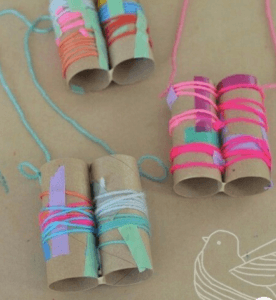
Make some binoculars with two toilet paper rolls and some string. Allow your child to use different materials to decorate the toilet paper rolls. You can keep it simple with markers and crayons or get more elaborate with glue and/or paint.

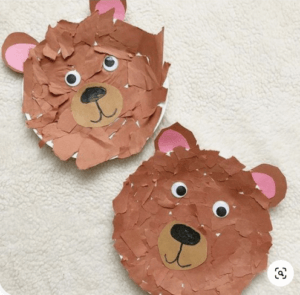
Make your very own bear! Better yet, once your bear is done hide it in your home and go on your very own bear hunt! Don’t forget to incorporate the book and use similar phrases and scenarios.

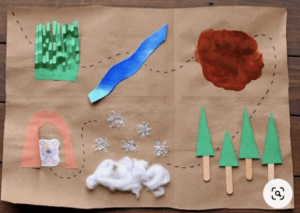
Make a bear hunt map! You can replicate the book or come up with your own obstacles. This is another activity that you can keep simple with crayons and markers or go all out with misc free art materials including paint and glue.


Happy bear hunting!