Skip to content

Archives

Parenting an Atypical Child

When I (finally) got pregnant, I had the normal mom-to-be worries and thoughts: what will my baby look like? Will this pregnancy make it to term? What is the due date? Will my child be healthy? Will it be a boy or girl? And I even asked myself: What if my baby is born with a disability? Although no amount of mental preparation can truly make a person “ready” for a new baby, I felt like the combination of this future-tripping and my type-A personality, my education, and experience working with children made me close.

The first curveball I was thrown was going into preterm labor. I was actually on my way to work at SLC when I could feel something was “off”. When I called the nurse, I was advised to go to the hospital. I was 36 weeks pregnant, just a few weeks to full term, but I knew about the important development that happens in that last month of pregnancy, and I was anxious. Needing to be in control, I drove my husband and I to the hospital.

One of the many doctors I saw over the next two days while they delayed my labor, mentioned that his daughter was preterm and “just had to have a little support through speech therapy”, but that many NICU babies can easily catch up. That assuaged my fears a little, but I was mostly concerned with the immediate concern of her being whisked away immediately after birth. After waiting such a long time for active labor, when I was in it, it was quick. After my first push, I heard the resident doctor say to the attending “oh! Is that the head??” It was. And after just two pushes, Eloise was born. They put her on me and she grabbed for my finger, squeezing it tightly, but I didn’t hear her cry. I didn’t want her to be taken from me, but I didn’t understand why they weren’t taking her to get breathing support (something I still worry had an impact on her development and medical history today).

Two long, gut-wrenching weeks later, our girl was finally released from the NICU and came home. Everything in the first few months were amazing. I adored being home with her and seeing all her development in the first two months of life. Luckily the way my husband and my work schedules are, he is with her in the morning and I am with her in the afternoon and evenings. Things were going great. Fast forward to 6 months later, when we were returning from Eloise’s first trip to visit family in California. On the plane ride home, Eloise was sleeping on me and her arm started twitching and didn’t stop when I touched it.  We already had her 6-month appointment coming up in a week, so I told her pediatrician about it. She suggested we go get evaluated by a neurologist at Seattle Children’s. Of course, the closest appointment was months away, so we waited. The twitching started happening more and was accompanied by a fixated stare and lack of recognition. This would happen between 5 and 25 times within a minute or less, increasing each time. When it happened 5 times in a row, I knew we needed to see a doctor immediately. My husband had taken the car to work, so my mom picked Eloise and I up and we went to the ER.

After a few nights in the hospital, multiple tests and pokes, it was confirmed that Eloise has epilepsy. That was 3 years ago, and we still don’t know why. We continue to do tests, mostly to rule things out. In addition to her seizures, I began to notice delays. Having experience with typically developing kids, I realized Eloise wasn’t hitting her milestones. Between her epilepsy, low muscle tone noted by her doctor, and these delays, we started investigating early intervention. Since about 8 months old Eloise has been in multiple therapies from physical therapy, occupational therapy, and speech therapy. She has attended the Boyer Clinic for children with delays and/or medical needs, and this September started at Broadview-Thomson developmental preschool, a program for kids with special needs. We may never know why Eloise is delayed or has epilepsy, and I am learning every day to live with not knowing. In the end, it doesn’t really matter, why, it matters how we move forward and give Eloise all the love and support she needs to be happy and healthy.

Although a little overwhelming at times, coordinating her care, I will tell you—early intervention is the easy (and most beneficial) part of the journey. The biggest obstacles I face parenting an atypical child are in my head. Most people would see and interact with Eloise and maybe not think she had any special needs. I struggle with knowing if I should tell other people, so they have an understanding of how she acts, and can have realistic expectations for her, but I also don’t want her delays and medical needs define her. For the other parents and kids at the park, I have to remind myself that their thoughts or opinions don’t matter and it isn’t necessary for me to step into every interaction and say “oh she doesn’t understand that”, or “she needs space”. Eloise is capable of establishing her desires and needs and won’t learn to find her voice if I am constantly providing it for her. On the other hand, when it comes to classes, school, and teacher/instructor-led activities, I do think I need to advocate for her and give her teachers an accurate look at where she is developmentally.

Parenting an atypical child also comes with some grief. You imagine the life your child is going to have and how you will provide that for them, but as I have come to learn, it does NOT goes as planned. I was the type of child who was shy, but obedient, and would do things like sit on Santa’s lap, and participate in a toddler dance classes and sports, and so I pictured the same things for my daughter. I know it is okay that she refuses to sit on Santa’s lap (I mean it is pretty weird….) and I don’t feel any disappointment in Eloise when these visions do not work out, but it is also okay that I grieve over the things I thought would be. It is also not easy seeing other children Eloise’s age doing things that she is still many months away from achieving. Seeing typically developing kids every day points the differences out to me regularly. I try to remind myself that I LOVE the 0-5 phase, and if Eloise is in it a little longer, then I will just soak up all the snuggles, exploration, and naivety while I can!

I hope reading about my journey to discovering my child has special needs has helped those of you who see your children struggling in any areas, or see other children doing things your kids can’t (yet). They aren’t broken, or unintelligent, or bad. Even if they are displaying challenging behaviors, that just means they need a little more support. It is not easy to ask for support with your child; it feels like you cannot give your child what they need, but it is freeing to trust other experts. Just like a financial advisor, lawyer, or doctor, I know that they can provide things that I cannot because of their expertise and my lack of it. I also know that if I do not get her the support and help she needs now, she will have a much more difficult time catching up later.

If you take anything from this blog (and accompanying list of Seattle area therapists) I hope it is that early intervention for your child can be extremely impactful, even life-changing and that there is no shame in being atypical or having an atypical child. I have heard of many pediatricians through the years saying, “Oh let’s just wait and see how they develop”. I know very well that children develop at their own pace, but I also know just how vital early intervention is. Advocate for your child. There is NO harm in getting them evaluated. If nothing looks concerning, then great, they will most likely acquire those skills on their own time, but if something does look concerning, then steps can be taken to provide support as soon as possible.

Seattle Area Child Therapies


SLC does not have a partnership, affiliation, or any direct in-school experience with the recommendations below. Most are places where our students have sought services in the past and/or present, or we have heard good things about. Some may request a referral from your pediatrician, and make sure to check if your insurance is accepted.


How We Prepared our 20-Month-Old for a New Sibling

Bringing a second child into the world is absolutely terrifying. I had so many questions running through my head and even felt like a bad mom for imposing such an intense change to Dahlia’s life. I do know how ridiculous that is but mom guilt is a crazy thing. Now that her little brother, Johnny, is here it has been the best thing ever. She transitioned wonderfully and loves him so much. Here are a few things we did to help ease her transition into big sisterhood.


  1. We put out Johnny’s stuff early. Like really early, maybe halfway through my pregnancy? We had out his crib, his diapers, the boppy pillows, and his clothes. We wanted Dahlia to see his stuff around the house so she could get used to it. The goal was for it to just become a part of the house and not an invasion of objects, especially when her brother was also going to come and take over some of her space. This also gave us an opportunity to explain what they were and who they were for! She was particularly interested in his diapers.
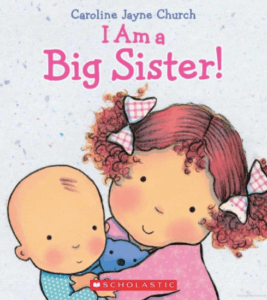
  2. We read two books to her about becoming a big sister a lot. They are pictured below. Books are such a powerful tool and I highly recommend reading books for any big change or transition! If you ever need a book recommendation please reach out and let us know.
  3. We used her baby dolls as an example for her little brother. She helped us change the baby’s diaper, burp the baby, and she pushed the baby in her own little stroller all around the neighborhood for months. We told her that babies cry a lot and we practiced making crying noises as well as what we could do when the baby was crying.
  4. Once Johnny was here we were really intentional about protecting her space and favorite toys. We asked if he could come in her room with her if she was playing alone and she has always said yes (we wanted to respect her alone time if that is what she needed). If I propped up stuffies or books that were hers for him to look at during tummy time she occasionally got possessive so we talked about how those toys were special to her and she didn’t want her brother to play with them. Most of the time she is happy to share her things and often offers them to him but there are a few moments where she is unhappy with him “using” her stuff which is ok! I don’t expect her to want to share all the time.
  5. Johnny uses a pacifier and Dahlia was weaned from hers at 6 months. Occasionally she will take his and play with it by walking around and sometimes suck on it. We don’t really pay any attention to it because we don’t want to make a big deal of her playing with the paci. After experimenting with the it for a short period of time she typically gets bored with the pacifier and finds Johnny to give it back to him. We have a lot lying around the house so we never need the one Dahlia has.


I hope some of these tips are useful and a good starting point for you as you prepare your child for another sibling! I added some links to articles below that have also been helpful for us in this transition.


Navigating the New Sibling (With Confidence and Love)

https://childmind.org/article/preparing-child-new-sibling/

When the Tables are Turned

At school I am known as Miss Stacey but what most don’t realize is that I am learning just as much from my students (if not more) than they are from me. Here is just a sample of the lessons learned from my most favorite teachers:

Forgiveness and letting go: It is a familiar seen to any early childhood classroom to see some type of conflict though out the day (So and so took my car, I want to play with this but they won’t let me!) but to see the children learn to communicate, say their piece, and move on never ceases to amaze me. I even witnessed an incident the other week where a friend got hurt by another friend and this friend went to go check on them and see how they were doing to which the friend responded “It’s ok, I’m ok, I know you didn’t mean to hurt me and we are still friends.” Talk about a beautiful moment!

How to be present and engage: In a world full of distractions these children bring me back and remind me to enjoy the simple things in life and the power of connection. There is nothing as sweet as really diving into their worlds with them whether that is being present in a game or read aloud, or spending the time to just listen and talk with them. Building solid relationships is everything!

Intentionality and purpose: When it comes to the lessons I want to teach, the behavior management techniques I utilize, the language I choose with the children I am continuously reminded how my actions matter. I am inspired to think about my actions and behaviors with a reflective, intentional, and purposeful lense to ensure I am the best Miss Stacey I can be for these children- and its not always easy but these children deserve nothing less.

To slow down and find the joy around you:  As adults we may not always take the time to stop and find the beauty in some of the smaller or simpler things in life. A child’s joie de vivre is extremely contagious. They will get so excited for a simple walk to see the chickens or the passion they exude when discussing their interests (I have had countless exuberant conversations about bakugans, unicorns etc) leaves me something to strive for in my own life.

Their courage and confidence. My comfort zone is a place where shockingly I am super comfortable in and struggle to venture outside of. When I see children tackle new experiences and their persistence and determination in these situations gives me the confidence and support that I can do it too! Children move through the world with a confidence, boldness, and fierceness that should be admired and celebrated. They are often the mirror you need to see your most authentic self.

While this list could truly be a never ending list I’ll end with a simple thank you for allowing me the privilege of learning from these masters daily and a cheers to them!


Love,
Miss Stacey

Play 101 by Lily Talley

This blog post is from Lily’s book summary of Einstein Never Used Flashcards. This particular part of the book summary comes from Chapter 9 and discusses the basics of play and learning.

Chapter 9  Play, The Crucible of Learning

Playful moments are really learning opportunities in disguise. The evidence is very clear. Play promotes development-and in a number of areas. Play promotes problem solving and creativity. It also helps to build better attention spans and encourages social development.

Self-exploration through play is a learning experience that “teaches” problem solving in a fun way.

Researchers have discovered that play is related to greater creativity and imagination and even to higher reading levels and IQ scores.

The level of children’s play rises when adults play with them.

One of the key components of development is learning to manipulate symbols and reason abstractly.

Play 101

Play must be pleasurable and enjoyable. Play must have no extrinsic goals. Third, play is spontaneous and voluntary, freely chosen by the player. Fourth, play involves active engagement. And finally, play contains a certain element of make-believe. Play needs to stem from a child’s desire.

It is through free play that children learn not only to have fun with children in organized activates, but also to create activities themselves. They learn initiative. According to Susan Bredekamp of the National Association for the Education of Young Children, writes, “Children will feel successful when they engage in a task that they have defined for themselves.” It is not considered developmentally appropriate for teachers to use “highly structured, teacher-directed lessons almost exclusively,…deciding what the children will do and when while expecting the children to listen passively or do pencil and paper tasks for long periods of time.”

It’s just not true that the best kind of learning takes place only when a big, smart adult directs the child’s every move.

Play is to early childhood what gas is to a car. Play provides a strong foundation for intellectual growth, creativity, and problem solving. And it also serves as a vehicle for emotional development, and for the development of essential social skills. In the 21st century, creative problem solvers, independent thinkers, and people with expert social acumen will inevitably surpass those who have simply learned to be efficient at getting the right answers.

Play builds versatile and supple intellectual skills; play is the place where problem solving comes alive.

Free play and guided play hold the key to more fulfilling lives.

One of the hallmarks of the advancement of play is the decrease in using objects one at a time and the increase in using them two or three at a time.

So pretend play is practice for children in freeing themselves from what is right in front of their eyes. Pretend play allows children to consider answers outside the box.

Availability of play materials is one of the most consistent predictors of intelligence even when the children entered school. Have a range of toys.

Divergent problems when playing have multiple solutions, such as when you play with blocks. There are a variety of ways a structure can be built, and require a greater amount of creativity.

We want children to know how to find the right answer when there is one, but we also want them to be able to think outside the box.

Research has shown that the more advanced children’s pretend play is, the better they do on divergent problem-solving tasks.

In play, we do learn about objects and their relations, but we also learn about people and relationships. Children create emotional comfort for themselves through play. After about 2½, pretend play starts to take place with other children and, if the child is lucky, with parents and caregivers.

Children are at the highest level of their development when they are at play. Play serves three functions:

First, it creates the child’s “zone of proximal development.” This is where the child goes a little further than what she can accomplish alone.  Another function of play is to help the child separate thought and action.  Finally, play as facilitating the development of self-regulation. Play also helps children work through difficult emotional events. Socio-dramatic play feeds into literacy because it becomes practice for storytelling.

By 13 or 14 months, children begin to use cooperative play. They might seek out one another, or take toys from one another. Sharing is not one of their better qualities at this age. They are much more sophisticated in their play with familiar children than with unfamiliar children who come over to play.

Professor Marjorie Taylor tells us that children with imaginary companions tend to be more intelligent and more creative than children who don’t have such friends.

It is not until age 7 or 8 that our children can truly understand the rules and play with strategy and planning. This applies to activities such as board games and soccer.

Play is a mirror of children’s thinking and motor abilities.

Playing outdoors, supervised, is important to help stimulate creativity.

Summary

  • Become an advocate for play. Let us transform preschool rooms back into indoor playgrounds that encourage and promote learning in a playful way.
  • Provide the resources for stimulating play.
  • Join in the fun.
  • Let your child take the lead.
  • Encourage your child to use his imagination.
  • Evaluate your child’s structured activities.

Ask a Dentist!

One of our parents at SLC Montlake, Tyler Radkey, is a dentist in Magnolia who works with both adults and children. Not long ago we asked our parents if they had any questions for a dentist and he kindly agreed to answering them for us! Below are your questions and his response 🙂

Thank you Tyler!

Any tips for encouraging a little one to spit after brushing?
I actually don’t focus much on spitting after brushing. We should be using such a small amount of toothpaste (rice-sized for ages 1-2 or pea-sized at 3+ ) that it’s non-harmful if ingested. Plus it’s great to let the toothpaste sit on the teeth in order to help with tooth remineralization and cavity prevention. I never spit or rinse after brushing myself. 
When should families start flossing in children?
Start trying right away! Honestly it will be fairly tough, and they may just try to chew on it, but the idea is just to ‘normalize’ flossing early on. And lets be real, you don’t have to try everyday, I think if you are getting in there 2-3 times a week you’re on the right track 🙂
When should my child go to their first dental visit? What can I expect at my child’s first dental appointment?
Ideally you should try to go within 6 months of the first tooth coming in (according to American Academy of Pediatric Dentistry). Since teeth start to come in on average around age 6 months, age 1 is a good goal. This definitely sounds daunting, but again the goal is to normalize it as much as possible early on. These early visits usually are nothing more than a ‘lap-exam’ – where the child is on a parents lap, we lean them back and take a quick look, and try to brush a little with a toothbrush. Then it’s time for stickers and balloons!!
How can I encourage my child to brush their teeth when they are not interested?
This is a daily fight in every house. Kids don’t usually have the manual dexterity to brush themselves (effectively at least) until ages 5-6. So prior to that it’s really a matter of doing it for them. Some days they want to help, many days they fight. I have tried singing, counting, telling stories – basically just attempts at distraction, while we brush (sometimes while holding them down also). I sit on the floor, and have my daughter lay down with her head on the floor in front of me, it makes the access much easier when you aren’t both vertical.
Favorite brand of toothpaste for small children?
We use Sensodyne Pronamel, same as the adults. It’s not acidic, not abrasive, and has a minimal amount of additives. Also it seems that the ‘flavored’ pastes encourage kids to just eat it – so I would avoid these if possible. But anything you are using that they don’t hate is great! The goal is just to get it done 🙂
How harmful is thumb sucking and pacifiers?
Chronic use can influence or impede development or the hard palate or the roof of the mouth. A narrow palate can increase the incidence of airway issues and bite problems later in life. It is correctable, but may require orthodontics or even corrective surgery to expand the palate. Definitely avoid both or discontinue as soon as you can. 
We appreciate Tyler taking the time to answer our questions! If you are a professional who works with children and would like to have a featured post on our blog be sure to let us know 🙂