Skip to content

Archives

Separating and Reconnecting

Starting childcare is a big milestone for both parents and children. Hard drop offs can cause for some distraction and worry for parents during the work day. We do our best to coach parents through a drop off routine that will set their child up for success and help them transition into childcare, helping both children and parents to be confident with their new daily schedule. Reconnecting is also an important part of this process! Continue reading for ways you can make separating and reconnecting a positive experience for you, your child, and your child’s teacher.

SEPARATING

Arrive on time and greet your teacher as a friend, someone to whom you are comfortable entrusting your child. Your child needs to hear from you that he will be safe when you are not there.

Tell your child when you’ll return—“I’ll be here after you eat your lunch.” Some children need to hear what you will do without them. (Don’t make it sound too fun, though!) Do not leave without saying good-bye. Learning to say good-bye and building trust that you will come back can only be taught to your child by you.  When you are ready to separate from your child, engage the teacher in the process. Teachers will hold back, waiting for your cue. When you hand your child over to his teacher, you are confirming your trust in that adult.

When you say, “Goodbye, I am leaving now,” do not linger.  Lingering after you have already told your child you will leave, creates mistrust and says “I don’t do/mean what I say.”  Say good-bye quickly and confidently, reassuring your child that you know his teachers will take good care of him and have lots of fun things to do. Save any distress you may be feeling about leaving your little one until you are out the door; that distress will be translated as fear and will rattle the most confident of children.

Find your comfort level. Call the office as many times as you need or stay in the office until you are secure that your child has made a successful separation.

RECONNECTING

The intense feelings a child has upon reconnecting have not always been accorded the same respect as separation. While a child may be adjusting wonderfully to the activities in the classroom, she is exerting great energy in learning how to cope, taking chances in a new environment, handling situations she has never before encountered, and watching for reactions from the “new” adults in her life. When you walk back into the room, it may well release a flood of emotions—from pure joy and excitement to tears of relief that you did, in fact, come back! Whatever the reaction, respect the intensity of those feelings as well as the overwhelming need she has for your undivided attention.

A basic tenet of Early Childhood Education is to always be eye level with a child. Not only is this a sign of respect and personal concern, but it also eliminates other distractions. Quietly approaching your child, kneeling down to his level, and offering a hug and smile will end the school session on a wonderfully positive note and begin your time with him just as positively. These few short moments are a truly worthwhile investment.

Say good-bye to your child’s teacher, putting the final positive spin on the day; then leave with your child. For many weeks, your child’s anxiety level will be relatively high at this time. Your reconnection needs to stay personal and quiet, giving your child time to calm down in his most secure environment—with you.

Don’t be surprised if your child cannot recount the happenings of his day. You will likely find out more during a quiet moment at bedtime than you will as he is reconnecting and settling back into the world he knows best.

You are your child’s life teacher and as is the case with so many other parenting issues, re-examining your own attitudes about transitions is helpful when passing on these life skills.

“Most of what children need to learn during their early childhood years cannot be taught; it’s discovered through play.” Ruth Wilson

All About Miss Terri

Terri Burney- Lead Rainbow Teacher (2016-present)
Miss Terri has worked with infants and toddlers for over twenty-five years. She has acquired a Child Development Associate (CDA) certificate and continues to take courses about early learning. She loves children of all ages and has worked at multiple highly accredited centers both as a teacher and an administrator. Terri strives to create strong bonds with the children and encourages family involvement as much as possible.

Where are you from?

Georgetown, Texas

Do you have any pets?

No, but have had dogs.

What are your top three hobbies?

Movies, travel, and books.

 Favorite place to travel?

Hawaii.

Favorite animal and why?

Koala bears because they are cute and cuddly, and hippos.

How long have you been a teacher?

Over 40 years.

What do you like most about being a teacher?

The kid’s smiles and being a part of the kid’s extended families.

What is the most challenging part of your job?

When they are whining and not knowing what they need.

Most memorable moment in teaching?

When a mom brought in her child and handed her over and said, “this is your baby.” They still keep in touch and remember my birthday.

 If you had to eat only one food the rest of your life what would it be?

Fried chicken.

“Every child deserves a champion: an adult who will never give up on them, who understands the power of connection and insists they become the best they can possibly be.” Rita Pierson


Different Types of Play

At Seattle Learning Center we recognize and understand that children can participate in all kinds of play. When observing children and how they play it is important to know what types of play children engage in so we can create activities and an environment that is developmentally appropriate. Understanding types of play can also help parents and educators have a deeper understanding of a child’s social and emotional development. It can answer questions about a child’s behavior and even help ease some worries we may have, as parents, about our children in social settings.

Independent play

Independent play is just as it sounds, when a child plays independently or alone. This type of play is important because it can help with a child’s attention span, how to successfully keep oneself entertained, encourages creativity and imagination, and how to be a self-initiator. This is a type of play we see most often in younger children, partly because they have not yet developed the skills for more advanced types of play.

Sometimes it can feel challenging as a parent to encourage independent play. Here is a great article from Parents that gives guidance for teaching your child how to play independently.

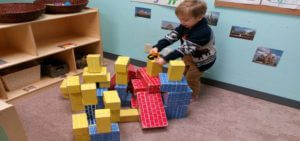
Block Play at Seattle Learning Center

Parallel play

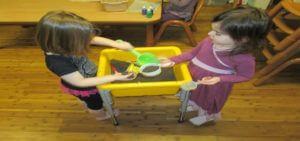
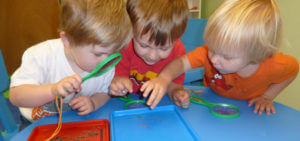
Parallel play is when children sit next to each other and are playing side by side. This is a type of play that can often look as though children are playing together, but they actually are not. Often times children are in their own world during this type of play but this play is an important building block in play development. This not only builds creativity and imagination but also exposes children to new words and teaches them social skills. There may be opportunities for some problem solving if a friend is in their space or maybe they are interested in a toy a friend has which presents an opportunity to learn sharing and turn taking. Here is an article about the benefits of parallel play.

Science

Science

Collaborative play

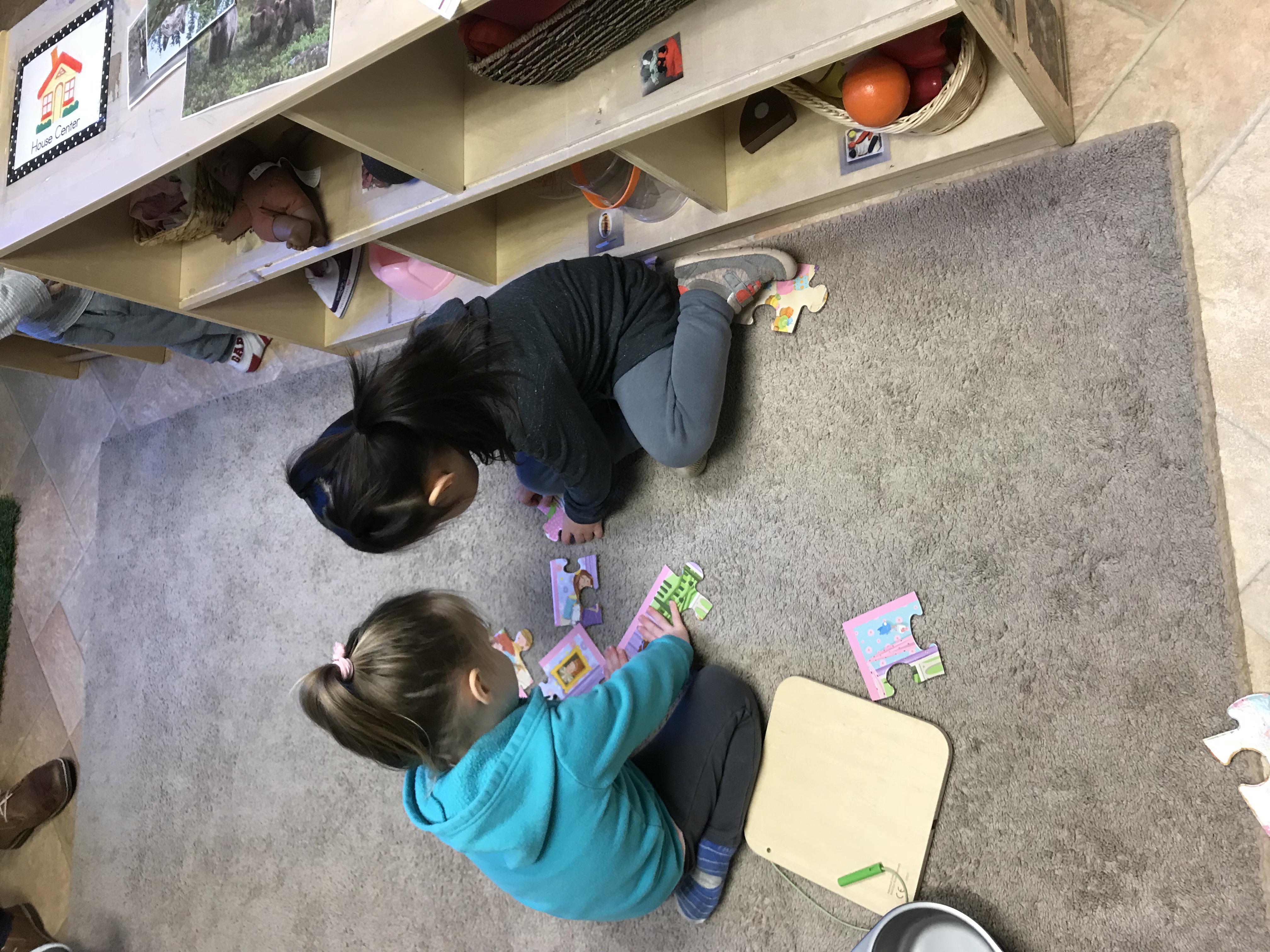
When children are learning and making their way through different stages of play, collaborative play is what they are working towards. Collaborative play is when children are working together through sharing, taking turns, cooperation, and sharing ideas. This is where you will see children building and creating with one another, using their imaginations for pretend games, or problem solving together with toys like puzzles. This is the type of play that will teach children important skills to carry into adulthood. Problem solving, teamwork, listening skills, setting boundaries, and empathy are just a few skills that children will get to practice during collaborative play. Collaborative play is an important milestone in child development. Read about ways to introduce collaborative play here.

Seattle-Learning-Center-Science

Play is necessary for children to gain skills to become life-long learners, problem solvers, self-initiators, and creators, to name just a few. Being able to have long stretches of uninterrupted play will allow children to practice important social and emotional skills as well as gross and fine motor skills. Understanding the different stages of play will help parents and educators to set the stage for significant growth in all of these areas.

“Children learn as they play. Most importantly, in play children learn how to learn.” O. Fred Donaldson

Happy Father’s Day!

Dads are funny. They have cool tricks. They do silly things. They know how to have fun.

This one is for you, dads. Happy Father’s Day from Seattle Learning Center!

“I like when my dad rides my bike with me.”

“My dada can wiggle his ears.”

“I like going swimming with him.”

“I like riding on his new bike with him. I love him.”

“I ride my bike with him.”

“My dad lets me play Go Pokémon everyday if I be’d good.”

“He wrestles me.”

“Playing with my daddy and my brother Cosmo.”

“He always chases me.”

“My daddy is funny playing ball. Sometimes it lands in the neighbor’s yard.”

“He lets me go on my bike and my swing. It’s an inside swing because the parks are closed.”

“They like playing on my own computer.”

“Playing. Funny playing.”

“He’s funny going into a bath.”

The Role of the Educator

We believe that early childhood educators are not only nurturers. They are partners, facilitators, observers, and co-learners who have a deep understanding of developmentally appropriate practice.  Our program is, at its heart, child-centered.  We have basic trust in the child to be an initiator and an explorer eager to learn what he is ready for.  Because of this trust, we provide the child with only enough help necessary to allow the child to enjoy mastery of her own actions.  During care activities (diapering, eating, dressing, etc.), we encourage all children to become an active participant rather than a passive recipient of the activities.

Block Play at Seattle Learning Center

We prepare our children to succeed in school by creating an environment that fosters confidence, curiosity, intentionality, self-control, relatedness, capacity to communicate, and cooperativeness. We believe that school success requires understanding of other people’s feelings and viewpoints, cooperating with adults and peers, emotional self-control, and the ability to resolve conflicts constructively. This social and emotional school readiness is critical to successful kindergarten transition and success in the early grades.

We give children plenty of time for uninterrupted play, giving them the freedom to explore.  Instead of trying to teach children new skills, we appreciate and admire what they are actually doing.  Our emergent curriculum encourages the use of creativity and flexibility in the creation of lessons plans and reflect the current interests of the children.  The selection of the topic is based on observations and discussions with the children and between teachers.

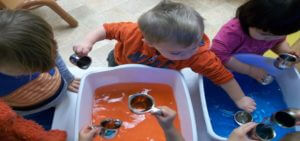
Sensory play at Seattle Learning Center

The educator watches, listens and reflects on what is happening in order to reinforce the child’s learning and appreciation of an experience.  We build on their interests by providing an environment that promotes learning experiences and by asking open-ended questions in play.  This approach supports child development because educators understand individual differences and arrange their room so that children can explore at their own pace.  We make available a wide range of materials and activities in order to allow children to make their own choices.  We work hard to match the curriculum to the strengths and interests demonstrated in the children.

We have time and time again been impressed by the skills these children learn when teachers set up the right environment, gives a child uninterrupted play, trusts the child and their ability to learn, and takes the time to observe and truly understand each individual child.

“Childhood is not a race to see how quickly a child can read, write, and count. It is a small window of time to learn and develop at the pace that is right for the individual child. Earlier is not better.” Magda Gerber